Get Marketing Insights First
Subscribe to receive actionable strategies, growth tips, and industry insights delivered straight to your inbox.
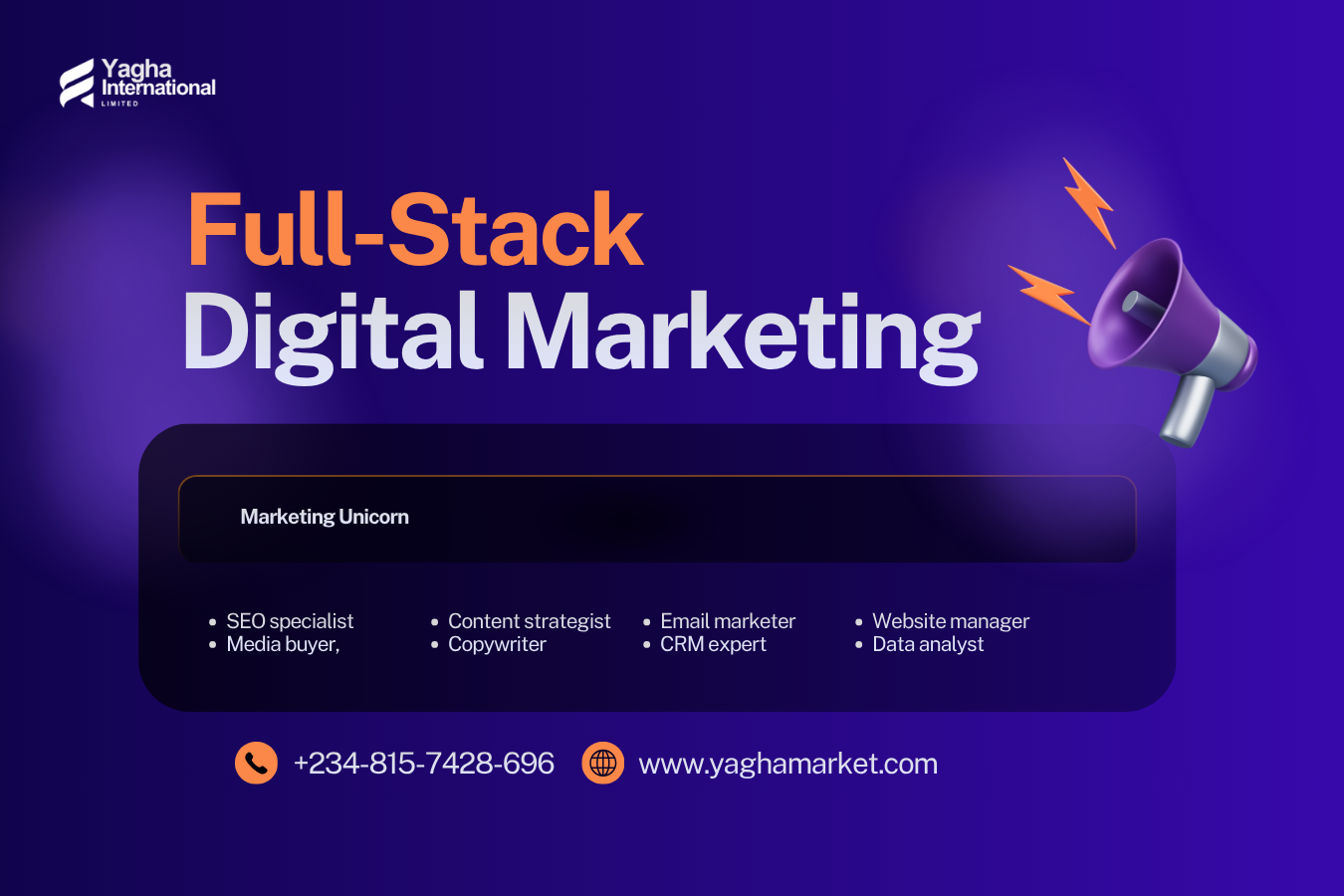
For years, the word “Full-Stack” belonged almost exclusively to software developers.
A full-stack developer understood both the frontend and backend of software development. They weren’t necessarily the best at every programming language, but they understood how every layer connected.
Today, another profession has borrowed that title.
Welcome to the era of the Full-Stack Digital Marketer.
And just like when full-stack development became mainstream, the new title has already sparked debate.
Some marketers celebrate it.
Some developers dislike the comparison.
Others believe it’s simply another fancy LinkedIn title.
But beneath the controversy lies a much bigger shift.
This isn’t about titles.
It’s about how businesses are changing.
Five years ago, companies hired separately for:
Today?
AI performs portions of every one of these jobs.
The marketer’s value is no longer found in pressing buttons.
It is found in connecting systems.
A business doesn’t need ten disconnected campaigns.
It needs one connected customer journey.
That’s where full-stack marketing emerges.
Contrary to popular belief, it does not mean mastering everything.
It means understanding how every digital marketing channel influences another.
For example:
A blog article improves SEO.
SEO brings traffic.
Traffic enters an email funnel.
Email nurtures leads.
Retargeting ads recover abandoned prospects.
CRM automation scores leads.
Analytics reveals weak points.
Everything works together.
The marketer understands the complete ecosystem.
Execution can still be delegated to specialists.
The criticism mostly comes from software professionals.
Their argument is understandable.
In software engineering, “full-stack” means competence across multiple technical layers built upon years of engineering knowledge.
Marketing is different.
There are no frontend and backend equivalents.
Instead, there are channels, psychology, creativity, automation, data, and customer experience.
Developers fear the title is being diluted.
Marketers argue the concept—not the technical meaning—is what has been adopted.
Both perspectives can coexist.
Artificial intelligence accelerated this movement.
A marketer no longer needs weeks to create:
AI assists with execution.
Humans now provide:
The broader your understanding, the more valuable you become.
Absolutely not.
A cardiologist still exists despite general practitioners.
Likewise:
SEO experts remain necessary.
Paid media experts remain necessary.
Conversion experts remain necessary.
Analytics experts remain necessary.
However, businesses increasingly need someone who understands how all these specialists fit together.
That person becomes the orchestrator.
The future isn’t specialist versus full-stack.
The future belongs to professionals who combine both.
Broad understanding.
Deep expertise.
Strategic thinking.
AI leverage.
Whether we continue calling them “Full-Stack Digital Marketers” or another name entirely is almost irrelevant.
The market has already made one thing clear.
Businesses no longer reward isolated skills.
They reward connected thinking.